
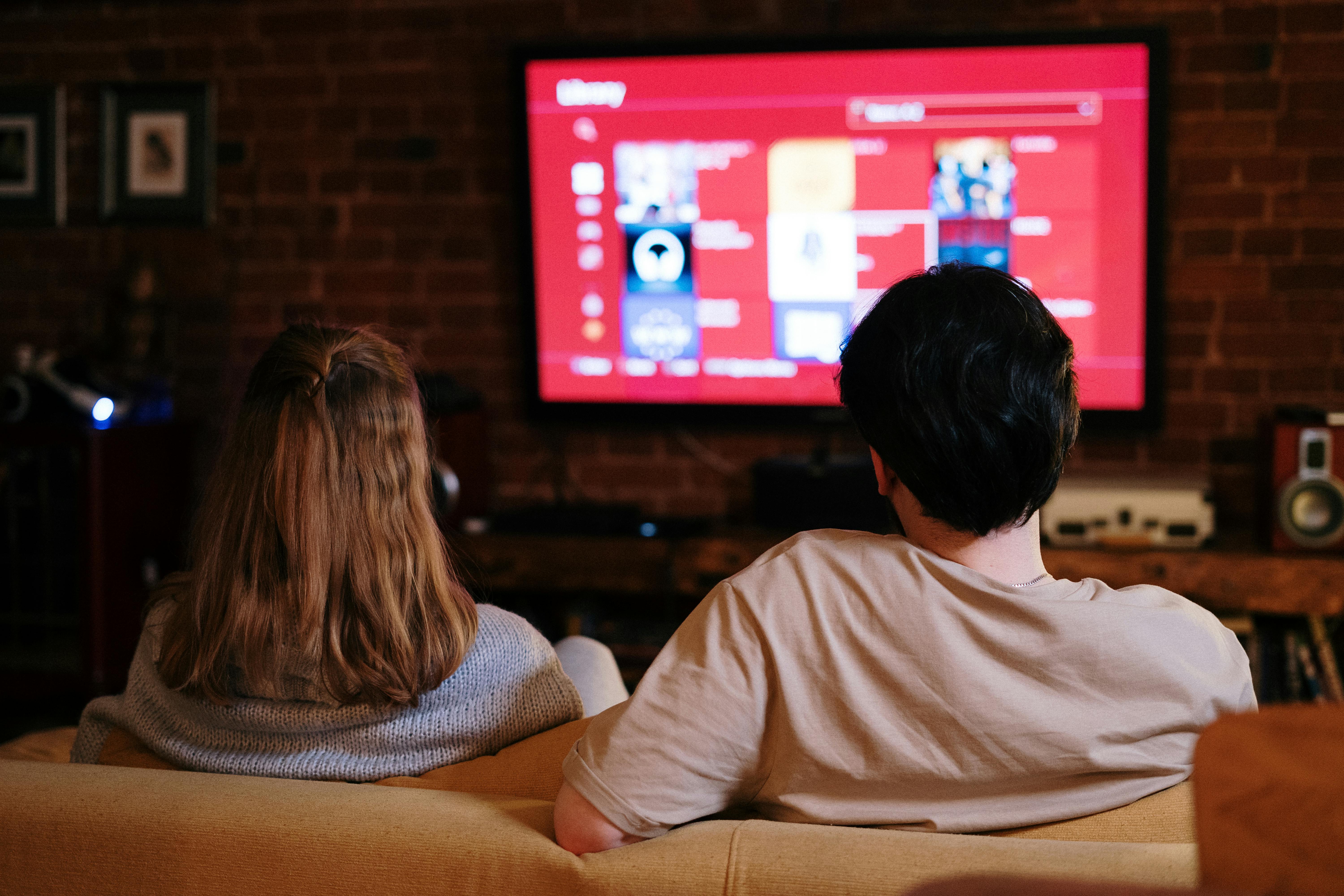
The short countdown that starts the next episode automatically is a small interface decision with large consequences. It changed the unit of television from the episode to the session.
Stopping became an action
Under a scheduled model, continuing required effort: staying awake, waiting a week, remembering to tune in. Stopping was the default state.
Autoplay reverses that. Continuing requires nothing and stopping requires a deliberate intervention within a few seconds.
Defaults are powerful because most people do not override them. Reversing this one changed viewing volume without changing anything about the programmes themselves, which is why services adopted it almost universally within a few years.
Endings became a liability
A well-made episode ending gives a viewer a sense of completion, which is exactly the feeling that makes someone reach for the remote.
Shows built for continuous viewing therefore avoid that feeling. Episodes end mid-movement, with a question opened rather than closed.
What used to be a craft achievement now works against the platform's measurement, so the craft has quietly been redirected. Writers still build to a moment at the end of an hour; the moment is simply designed to be unfinished.
The episode stopped being a self-contained thing
Traditional episodes had internal structure with their own beginning and end, because a viewer might arrive without having seen the last one.
When everything is available at once, that assumption disappears. Recaps, reintroductions and standalone plots all become redundant.
The consequence is series that behave like very long films divided at arbitrary points, which is why episode running times have become so uneven.
Measurement reinforces the design
Services track how far into a series viewers get, and completion is treated as evidence that a show is working.
A show that produces high completion is renewed. A show that people love but watch slowly registers as weaker, whatever the audience thinks of it, because affection leaves no trace in the data and speed does.
Commissioning follows the measurement, so the qualities that produce continuous viewing get selected for across whole slates.
The countdown also hides the credits
Autoplay shrinks or skips the end credits, which is the only place most productions name the people who made them.
Crews have raised this repeatedly, since credit is how careers are evidenced. Some services now hold the frame longer on final episodes.
It remains a partial fix, and the underlying tension is unresolved: the credits are where the session is most likely to end, which is exactly why they get compressed.