
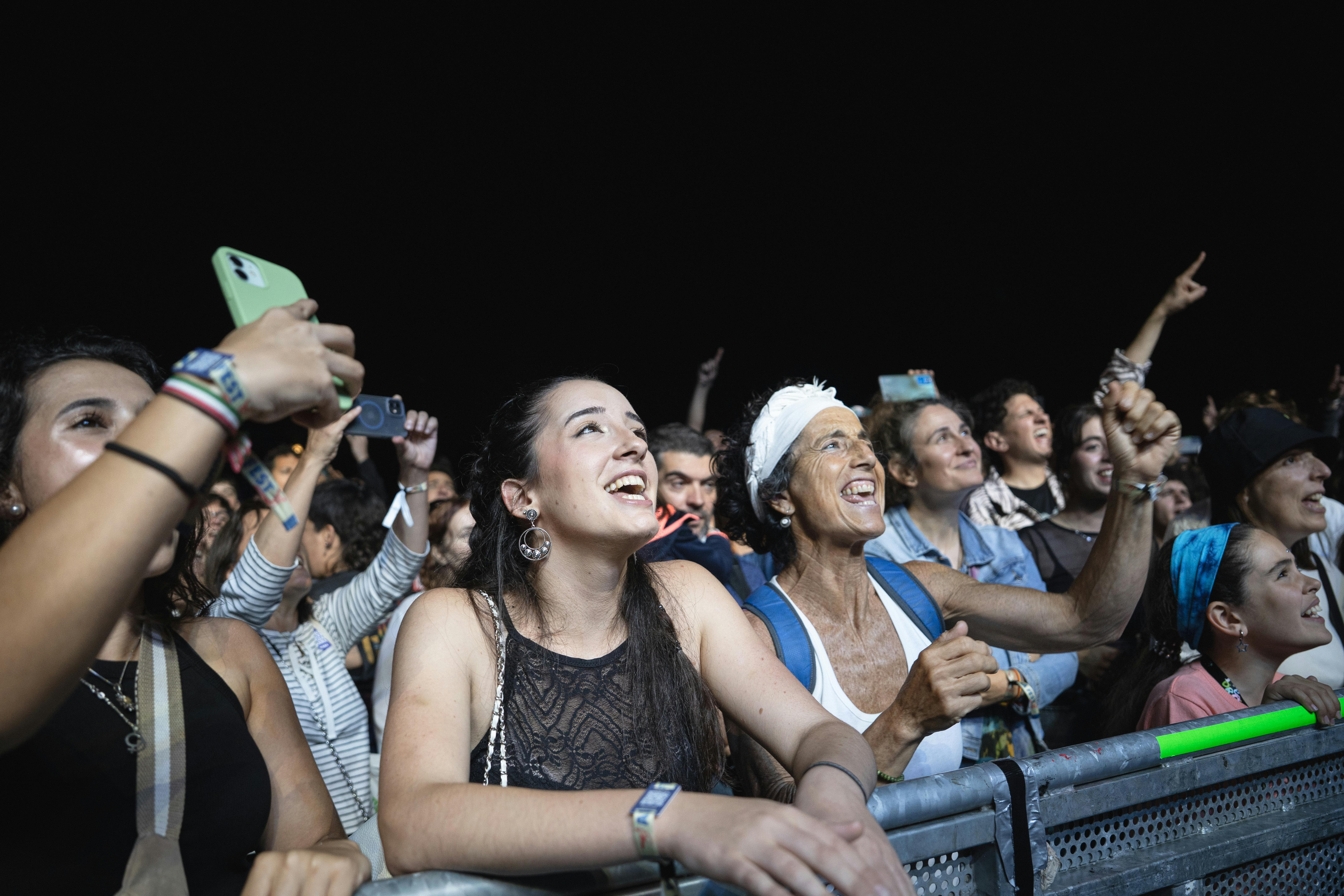
Doors open in the afternoon for a stadium concert and the headline act is often finished before eleven. The schedule is built backwards from a legally fixed endpoint rather than forwards from convenience.
The curfew is the binding constraint
Stadium licences carry noise conditions with hard end times, agreed with local authorities and typically with organised residents.
Breaching them carries penalties that can threaten the venue's ability to host future events, which makes the limit genuinely non-negotiable.
Everything else in the evening is arranged around that number. The headline set length is subtracted from the curfew, and each preceding element is placed above it.
Transport capacity sets a second limit
Tens of thousands of people leaving at once exceeds what any local network handles comfortably, and services thin out late in the evening.
Promoters coordinate with transport operators, sometimes paying for additional services, and the agreed departure pattern feeds back into the finish time.
A show that ends after the last practical services creates a crowd with nowhere to go, which is a safety problem before it is an inconvenience.
Long changeovers push everything earlier
Stadium productions require substantial resets between acts, since staging, instruments and lighting positions differ.
Each changeover consumes time that cannot be recovered, so the first act has to begin much earlier than the number of performances alone would suggest.
This is why doors open several hours before anything of interest happens, and why the schedule looks so front-loaded. Getting a very large crowd through security and into position is itself a slow process that has to finish before music can start.
Daylight has become part of the show
Summer stadium shows in northern latitudes now frequently perform substantial portions in daylight, which lighting design cannot compensate for.
Productions have adapted by building visual identity into screens, staging and costume rather than relying on light, and by scheduling the most light-dependent sections last.
It is a genuine constraint on presentation that follows directly from the curfew rather than from any artistic preference.
Local agreements vary more than audiences expect
Two stadiums in the same country can run to different limits, because conditions are negotiated venue by venue with different authorities and neighbours.
A tour therefore runs a different schedule in each city, and the same set can be trimmed in one place and complete in another.
Audiences interpret this as inconsistency from the act, when it is the outcome of an agreement signed long before the tour was routed. Comparing set lists between cities without knowing the curfew produces a misleading picture of what happened.