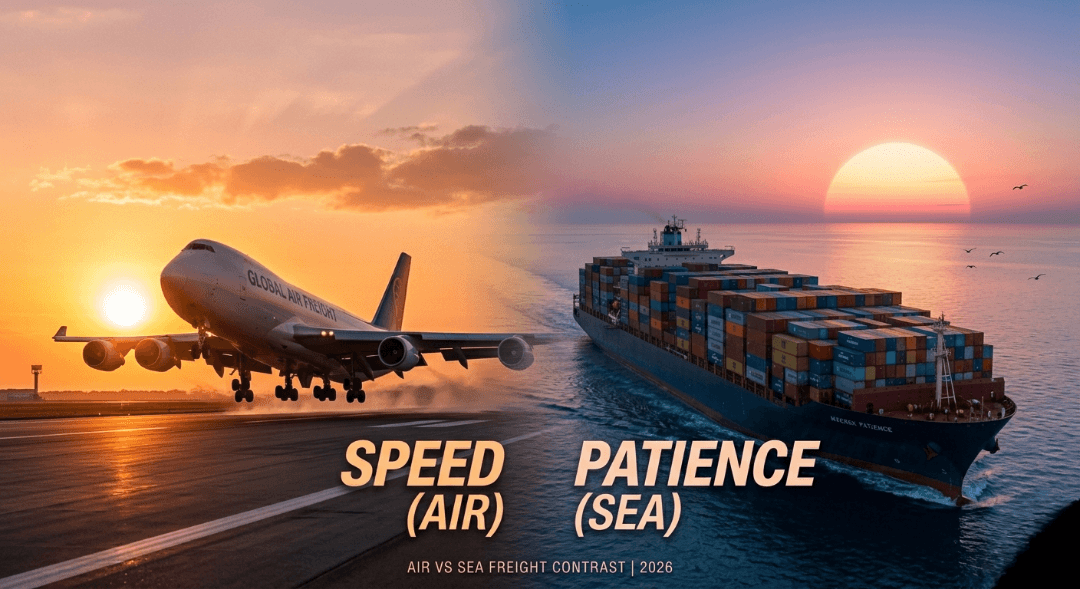
So… air vs sea freight (aka the decision that wrecked my budget once)
I first got into the whole air vs sea freight debate because I panicked.
Not even kidding.
I had a shipment—important-ish, slightly urgent, emotionally stressful—and I remember staring at two options:
- Air freight: fast… but expensive
- Sea freight: cheap… but slow
And my brain did that thing where it just short-circuits.
Like:
“What if it gets delayed?”
“What if I lose money?”
“What if I pick wrong and regret it forever??”
So naturally… I picked air freight.
Paid way more than I should have.
Shipment arrived early.
And I just sat there like:
“Cool. I paid extra for… peace of mind?”
Which is fine. But also… annoying.
The basic difference (but explained like a normal human)
Let’s keep this simple.
Air freight = fast but pricey
Sea freight = slow but cheaper
That’s it.
That’s the tweet.
But also… not really.
Because once you actually start shipping things, it gets more complicated. Like choosing between ordering takeout or cooking—sounds simple until you factor in time, effort, and your questionable cooking skills.
Speed: air freight is basically the overachiever

Air freight is fast.
Like “how is this even possible” fast.
We’re talking:
- 1–5 days internationally (sometimes even quicker)
Meanwhile, sea freight is like:
“Hey… I’ll get there. Eventually.”
- 20–40 days depending on routes
So if time matters—even a little—air freight starts looking real attractive.
But here’s the catch…
You pay for that speed.
And not just a little.
Cost: sea freight quietly wins (most of the time)
Sea freight is cheaper.
Like… noticeably cheaper.
Especially for:
- Heavy shipments
- Bulk goods
- Large volumes
Because ships carry a lot more than planes.
Planes are like:
“Limited space, premium service.”
Ships are like:
“Throw it on, we’ve got room.”
So if you’re shipping something big or heavy, sea freight usually makes more sense financially.
But wait—there’s always a “but”
Here’s where I messed up the first time.
I only looked at base cost.
Big mistake.
Because total cost includes:
- Storage fees
- Handling
- Delays
- Inventory holding costs
And suddenly… sea freight isn’t always that cheap.
The hidden cost nobody talks about: time = money
Okay, real talk.
If your shipment takes 30 days instead of 5…
That’s 25 extra days where:
- Your inventory is stuck
- Your money is tied up
- Your business is waiting
And if you’re running something where timing matters?
That delay can cost more than the savings.
I learned this the hard way when I missed a sales window because my shipment was still floating somewhere in the ocean.
Cool cool cool.
Reliability: neither is perfect (sorry)
You’d think air freight is more reliable.
And… kinda, yeah.
But:
- Flights get delayed
- Cargo gets bumped
- Weather happens
Sea freight?
- Port congestion
- Customs delays
- Weather again
Basically, both have issues.
It’s like choosing between two unreliable friends.
One is late.
The other is very late.
Pick your vibe.
My accidental experiment (aka how I learned this stuff)
At one point, I shipped two similar orders.
One by air. One by sea.
Didn’t plan it as an experiment—it just happened.
Results?
- Air shipment: arrived fast, cost more
- Sea shipment: arrived late, cost less… but caused delays
And when I actually calculated everything?
The difference wasn’t as huge as I expected.
That’s when it clicked:
It’s not just about price. It’s about timing.
When air freight actually saves you money (yes, really)
This surprised me.
Air freight can save money if:
- You need fast inventory turnover
- You’re shipping high-value items
- You’re avoiding stockouts
Because missing sales or delaying production?
That’s expensive.
Sometimes more expensive than the shipping itself.
When sea freight is the obvious winner
Sea freight wins when:
- You’re shipping in bulk
- Time isn’t urgent
- You’re optimizing for cost over speed
Think:
- Furniture
- Raw materials
- Large inventory shipments
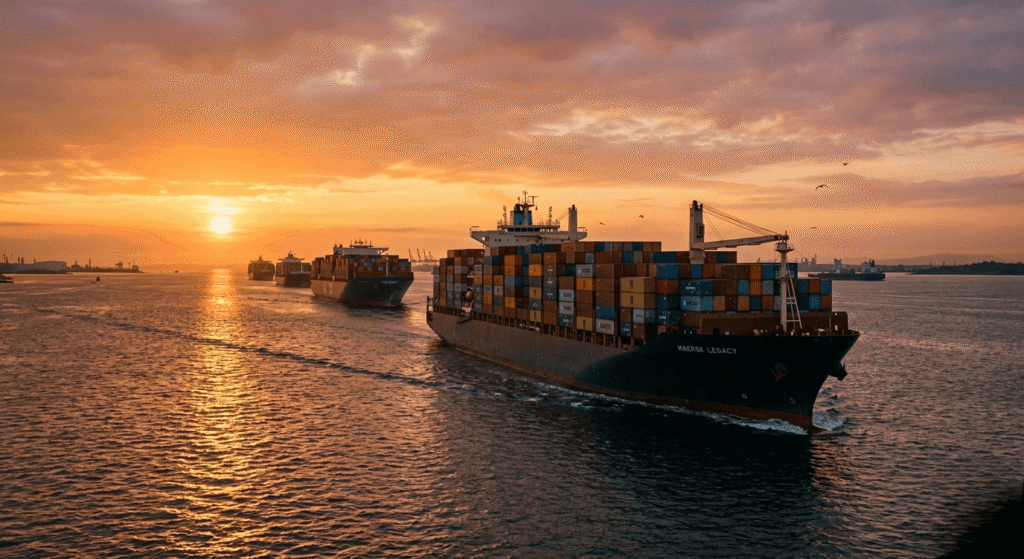
Basically, anything where patience pays off.
A weird analogy that helped me (stay with me)
Air freight is like ordering food delivery.
Sea freight is like meal prepping.
One is fast and convenient.
The other is cheaper but requires planning.
And if you mess up your planning?
You’re eating cereal for dinner.
Again.
The emotional side of this decision (because it’s real)
Nobody talks about this, but choosing between air and sea freight is stressful.
You’re balancing:
- Cost
- Time
- Risk
And there’s always that voice in your head like:
“What if I picked wrong?”
I’ve been there.
Still go there sometimes.
Practical tips (from someone who’s messed this up before)
1. Don’t just compare shipping rates
Look at:
- Total cost
- Timeline
- Business impact
Because cheap upfront can be expensive later.
2. Plan ahead (future you will thank you)
If you know you’ll need inventory…
Order early.
Sea freight becomes way more viable when you’re not rushing.
3. Mix both methods (this is underrated)
Use:
- Sea freight for bulk
- Air freight for urgent items
Best of both worlds.
Also makes you feel like you know what you’re doing.
4. Always ask: “What’s the real cost?”
Not just money.
Time. Delays. Opportunity.
All of it matters.
If you wanna go deeper (and slightly nerd out)
You can check:
- https://www.flexport.com/blog/ (they explain freight stuff in a pretty readable way)
- Or watch logistics breakdowns on YouTube—some are weirdly addictive