I Ordered Socks… and Accidentally Learned About the Entire Global Supply Chain
Okay, so this whole thing started because I ordered socks.
Not exciting socks. Just… socks. Black. Basic. The kind you don’t even think about until one goes missing in the dryer and suddenly your life feels slightly off-balance.
Anyway—two days later, they show up.
Two. Days.
And I had that moment—you know the one—where you stare at the package like:
“How did this get here so fast?”
And boom… that’s when I fell into this weird curiosity spiral about how modern warehousing is changing the global supply chain.
Because clearly something has shifted. Like… a lot.
Warehouses Used to Be Boring (No Offense)
Growing up, “warehouse” sounded like:
- Dusty boxes
- Dim lighting
- A guy named Mike yelling about inventory
And maybe a forklift doing its thing in the background like it’s part of the scenery.
That was the vibe.
Now?
Now it’s like someone gave warehouses a glow-up. A serious one.
The Glow-Up No One Talks About
So I was talking to a friend (everyone has that one friend in logistics, right? no? just me?) and he goes:
“Warehouses aren’t storage anymore. They’re like… decision-making hubs.”
I laughed.
Then I realized he wasn’t joking.
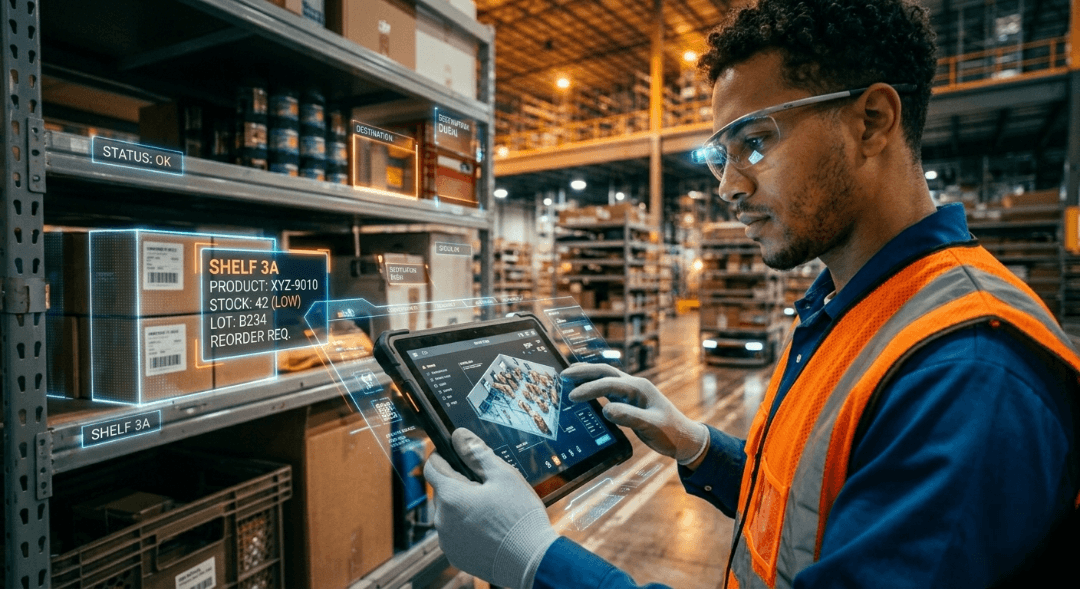
Modern warehouses are basically:
- Data centers with shelves
- Robot playgrounds
- Strategy zones where products are constantly moving, not sitting
And suddenly, how modern warehousing is changing the global supply chain didn’t feel like some boring business topic.
It felt like… the reason my socks showed up on time.
Things Don’t Sit Still Anymore (Literally)
Here’s the wild part—inventory doesn’t just sit around waiting anymore.
It moves.
Constantly.
In older systems, stuff would just… exist on shelves until someone needed it. Now? Warehouses are actively repositioning products based on demand.
So if something’s trending (like… I don’t know, weirdly popular water bottles or those mini waffle makers everyone bought for a week), warehouses are already shifting those closer to shipping zones.
Before you even click “Buy.”
Which is honestly impressive and slightly unsettling.
Like… do they know me better than I know myself?
Don’t answer that.
Speed Is the New Currency (And We’re All a Little Spoiled)
Let’s be real for a second.
We’ve gotten used to fast delivery.
Not “a week is fine” fast.
I mean:
- Same-day
- Next-day
- “Wait, I ordered this last night??” fast
And modern warehousing is why.
Because everything is:
- Automated
- Optimized
- Tracked in real-time
There’s no guessing anymore. No “maybe it’s in aisle 7?”
The system knows.
Always knows.
And if something’s off? It fixes itself—or alerts someone instantly.
Meanwhile, I still can’t find my car keys half the time.
The Robots (Yes, We Need to Talk About Them)
Alright. Let’s not pretend this isn’t a big part of the story.
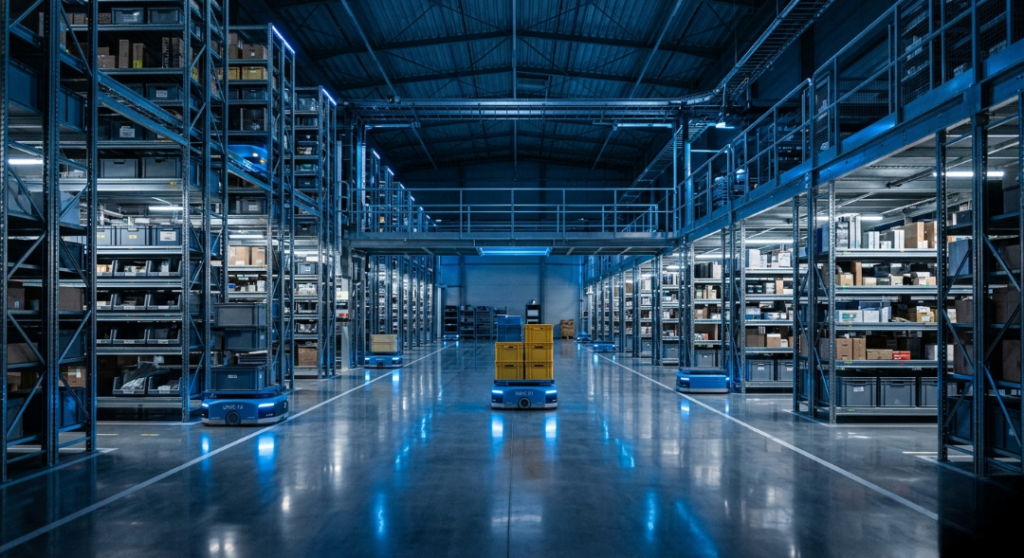
Robots are everywhere in modern warehouses.
Not scary robots. Not movie robots.
More like:
- Small, efficient, slightly adorable machines
- Zooming around with purpose
- Never needing coffee breaks (rude, honestly)
They handle:
- Picking items
- Moving shelves
- Sorting packages
And they do it fast. Like… blink and it’s done fast.
But here’s the thing—humans didn’t disappear.
They just… shifted roles.
Now people are:
- Managing systems
- Handling exceptions
- Fixing weird problems robots can’t understand
Because trust me, something always goes weird.
Technology is amazing, but it’s also… dramatic.
It’s Not Just About Speed—It’s About Smarts
This is where things get kinda mind-blowing.
Warehouses today use predictive analytics.
Which is a fancy way of saying:
“They guess what you’ll buy before you buy it.”
And they’re often right.
They analyze:
- Past purchases
- Seasonal trends
- Regional demand
So instead of reacting to orders, they prepare for them.
Which means fewer delays, less chaos, and smoother shipping across the entire global supply chain.
It’s like… the warehouse is thinking ahead for everyone.
Meanwhile, I’m still deciding what to eat for dinner at 9 PM.
The Global Part (Where It Gets Big… Like Really Big)
Okay, zoom out for a second.
Your package? It probably didn’t just come from one place.
It moved through:
- Multiple warehouses
- Different regions
- Maybe even different countries
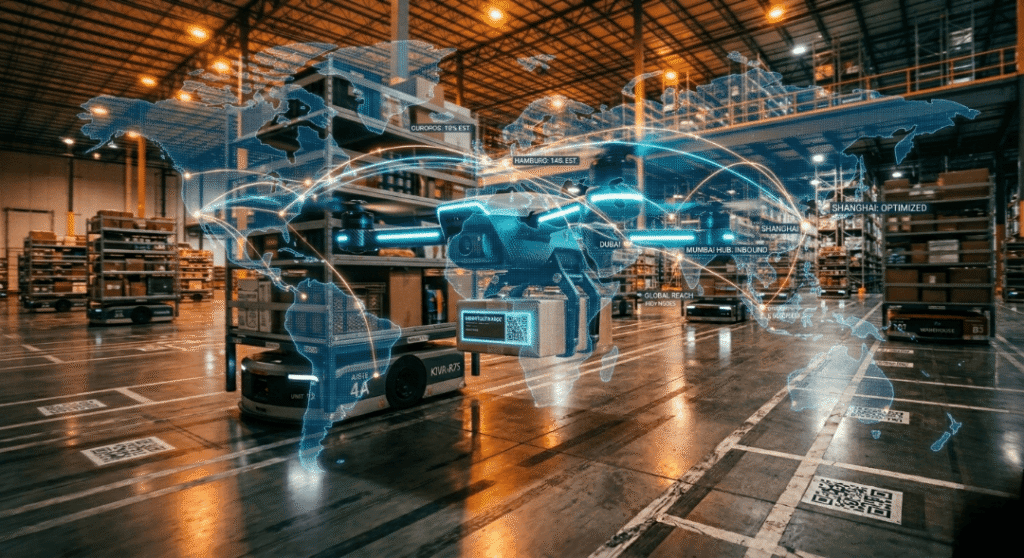
And modern warehousing connects all of that.
Seamlessly.
So when we talk about how modern warehousing is changing the global supply chain, we’re really talking about a system that:
- Links continents
- Coordinates inventory worldwide
- Adjusts in real time when things go wrong
Which… happens a lot, by the way.
Weather, delays, random disruptions—stuff goes sideways constantly.
But now, warehouses can adapt faster than ever.
It’s like a giant, global game of Tetris.
Except the pieces are packages. And expectations.
Random Thought (Because My Brain Does This)
At one point, I imagined what would happen if all this tech suddenly stopped.
No tracking. No automation.
Just… people and boxes.
Chaos.
Absolute chaos.
I’d probably still be waiting for those socks.
Sustainability (Yeah, It’s Actually a Thing Here Too)
Here’s something I didn’t expect—modern warehousing is trying to be more eco-friendly.
Not perfect, but trying.
Things like:
- Smarter inventory = less waste
- Efficient routing = fewer emissions
- Energy-saving systems inside warehouses
And honestly? It makes sense.
Because when you optimize everything, you naturally reduce excess.
Less wasted space. Less wasted time.
It’s one of those rare moments where efficiency and sustainability actually get along.
The Pressure Is Real Though
Here’s the flip side.
All this speed and efficiency?
It raises expectations.
Customers (aka… us) now expect:
- Instant updates
- Lightning-fast delivery
- Zero mistakes
Which is… a lot.
And warehouses are under constant pressure to keep up.
So yeah, modern warehousing is impressive—but it’s also intense.
Like running a marathon… every single day… with no finish line.
Where This Is All Heading (Probably Somewhere Wild)
If I had to guess—and this is just me guessing while drinking coffee and overthinking things—I’d say:
We’re just getting started.
Soon we might see:
- Fully autonomous warehouses
- Drone deliveries becoming normal
- Even faster global coordination
And honestly… maybe even things we can’t imagine yet.
Because five years ago, this already felt futuristic.
Now it’s just… Tuesday.
Places You Can Fall Down the Rabbit Hole
If you’re curious (or just procrastinating like I was), check out:
- Some behind-the-scenes warehouse videos on YouTube (weirdly satisfying)
- Or Reddit threads where workers share real experiences—some are hilarious, some are chaos
Fair warning: you might lose an hour. Or three.
So Yeah… It’s Bigger Than Socks
I started with a simple order.
Just socks.
And somehow ended up realizing that how modern warehousing is changing the global supply chain is kind of a big deal.
Like… quietly reshaping how the world moves stuff around.
Faster. Smarter. Slightly more robotic.
But also kinda amazing.