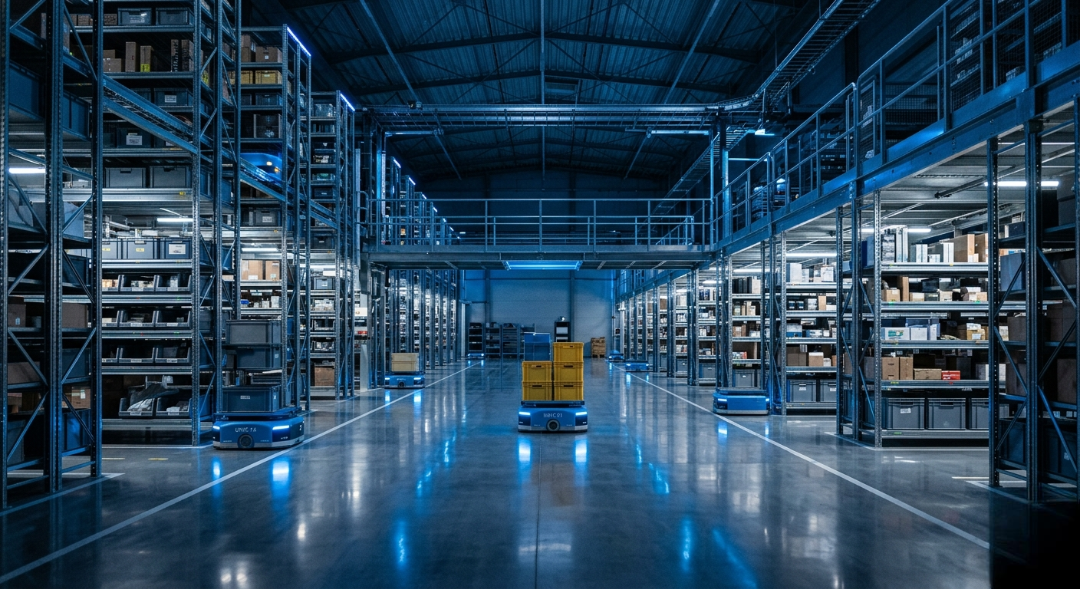
So I Saw a Robot… and It Was Better at Its Job Than Me
Okay, so the first time I heard about smart warehouses, I pictured something out of a sci-fi movie. Like… shiny robots zooming around while humans just stand there sipping coffee, pretending to supervise.
And then—this actually happened—I visited a warehouse (long story, involved a friend, free lunch, and me saying “sure why not”), and there was a robot.
Not dramatic. Not flashy.
Just quietly doing its job.
Better than I probably would.
And I had this weird moment where I thought:
“Wait… is this the future? Or did I miss a memo?”
The Old Warehouse Vibe (You Know the One)
Before all this AI stuff, warehouses were kinda chaotic.
You had:
- People running around with clipboards
- Boxes stacked in ways that made no sense
- Someone yelling “WHO MOVED THIS??” at least once an hour
It wasn’t bad… just very human.
Messy. Imperfect. Occasionally hilarious.
I mean, I once helped a friend organize inventory in his garage (does that count as a warehouse? emotionally, yes), and we spent 20 minutes looking for something that was literally right behind us.
So yeah. Humans… we try.
Then AI Walked In Like It Owned the Place
And suddenly, things started changing.
Not overnight. Not like a dramatic movie montage.
More like… slowly. Quietly. Slightly unsettling.
Smart warehouses started using AI to:
- Track inventory in real time
- Predict demand (like, before it even happens??)
- Optimize where things are stored
And here’s the thing—AI doesn’t get tired.
Or distracted.
Or spend 10 minutes scrolling on its phone because it got a notification.
Must be nice.
The Robots Aren’t Taking Over (But They Are… Helping A Lot)
Let’s address the obvious fear.
“Are robots replacing humans?”
Short answer: not really.
Long answer: kinda… but not in the scary way.
They’re handling the repetitive stuff:
- Moving items
- Sorting inventory
- Picking orders
Which frees humans up to do… thinking. Managing. Problem-solving.
Or, in my case, probably overthinking and double-checking everything.
I remember asking someone at that warehouse,
“So what do you do now that robots do all this?”
He shrugged and said,
“Less running around. More actual work.”
That stuck with me.
AI Knows Where Everything Is (Unlike Me, Ever)
This is my favorite part.
In a smart warehouse, AI systems know:
- What’s in stock
- Where it is
- When it’s running low
At all times.
Meanwhile, I still lose my keys inside my own apartment.
Explain that.
It’s not just convenience either—it cuts down errors.
Because when a system tells you exactly where something is, you don’t have:
- Guessing
- Searching
- Mild existential crises in aisle 7
The “Wait… It Can Predict That?” Moment
This part kinda blew my mind.
AI doesn’t just track stuff—it predicts things.
Like:
- Which products will sell more next month
- When inventory needs restocking
- Even seasonal demand shifts
It’s like having that one friend who always knows what’s going to trend before it trends.
Except this one uses data instead of vibes.
(Though honestly, vibes are underrated.)
Speed… Like, Actually Fast
You ever order something online and it shows up way too fast?
Like… suspiciously fast?
That’s not magic.
That’s smart warehouses doing their thing.
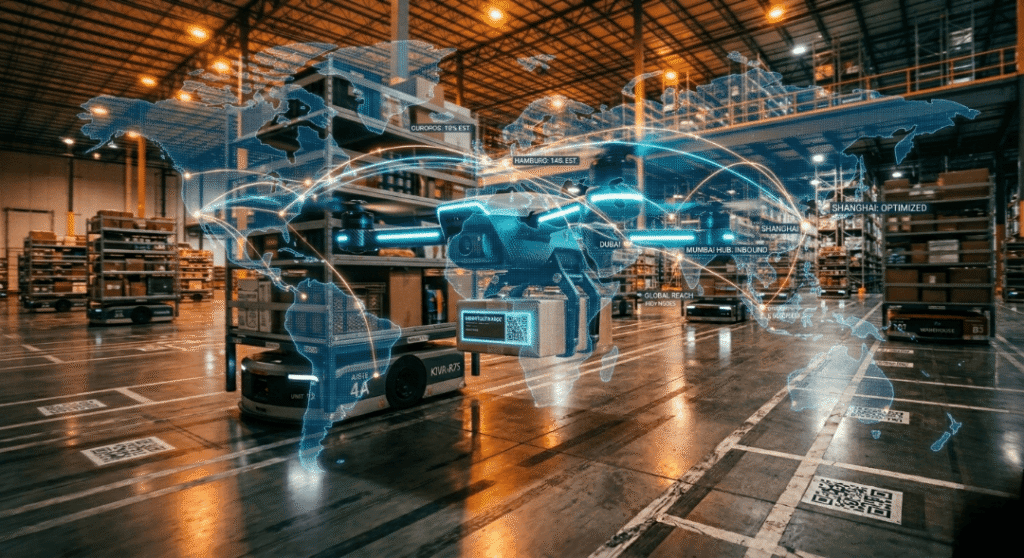
AI optimizes:
- Picking routes
- Packing processes
- Shipping decisions
So everything moves quicker.
And I mean… I’m not complaining. I once got a package so fast I forgot I even ordered it.
Felt like a gift from past me.
Fewer Mistakes (Because Humans Are… You Know)
Look, I love humans.
I am one.
But we mess up.
A lot.
Wrong item shipped. Wrong quantity.
AI reduces that.
Not perfectly—nothing is perfect—but significantly.
Which means fewer returns, fewer angry customers, and fewer “uhhh how did this happen” meetings.
It’s Not Cheap Though (Let’s Be Real)
Okay, quick reality check.
Smart warehouses sound amazing.
But they’re not exactly budget-friendly.
There’s:
- Initial setup costs
- Software investments
- Training
And not every business can jump in right away.
It’s like buying a super fancy espresso machine.
Worth it? Probably.
Necessary? Debatable.
The Weirdly Cool Part: Everything Talks to Everything
This is where it gets a little… nerdy.
In a good way.
Smart warehouses use systems that communicate with each other.
Inventory talks to shipping.
Shipping talks to demand forecasts.
Everything is connected.
It’s like a group chat where everyone actually responds and stays on topic.
Imagine that.
My Slightly Awkward Takeaway
So after seeing all this, I had this thought…
If warehouses can become this efficient, organized, and smart…
Why can’t I keep my inbox under control?
Or my kitchen?
Or literally anything?
AI can manage thousands of products in real time, but I still forget to buy milk.
Feels unfair.
But Seriously—Why This Matters
It’s not just about warehouses.
It’s about how businesses operate.
Faster systems → faster deliveries
Better tracking → fewer losses
Smarter predictions → less waste
And all of that adds up.
To better experiences.
For customers.
For everyone (except maybe the guy who used to yell about missing boxes—he’s probably quieter now).
If You Wanna Geek Out a Little
Okay, if this stuff intrigues you even a tiny bit:
- There are some wild warehouse robot videos on YouTube (highly recommend, oddly calming)
- Also, check out tech blogs like Wired or even random Reddit threads—people share behind-the-scenes stories that are chef’s kiss
And if you ever get a chance to see one in person?
Go.
Seriously.
It’s like watching a perfectly choreographed dance… but with robots and boxes.